
- This event has passed.
David Wojnarowicz: Where Evil Dwells + A Fire in My Belly + ITSOFOMO
September 17 8:00 pm – 10:00 pm
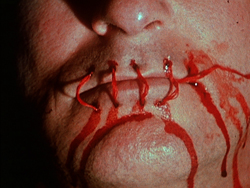
David Wojnarowicz: Where Evil Dwells + A Fire in My Belly + ITSOFOMO (In the Shadow of Forward Motion)
David Wojnarowicz channeled a vast accumulation of raw images, sounds, memories, and lived experiences into a powerful voice that was an indelible presence in the New York City downtown art scene of the 1970s and ’80s. Through writing, film, painting, drawing, photography, mixed-media installations, and performance, Wojnarowicz affirmed art’s vivifying power in a society he viewed as alienating and corrosive, especially for those who were not part of the “pre-invented existence” of the mainstream. Using blunt symbology and graphic illustrations, he exposed what he felt this mainstream repressed: poverty, abuses of power, blind nationalism, greed, gay sex, and the devastation of the AIDS epidemic. His nihilism, however, was also infused with his celebration and empathetic documentation of the alternative histories that he witnessed and lived.
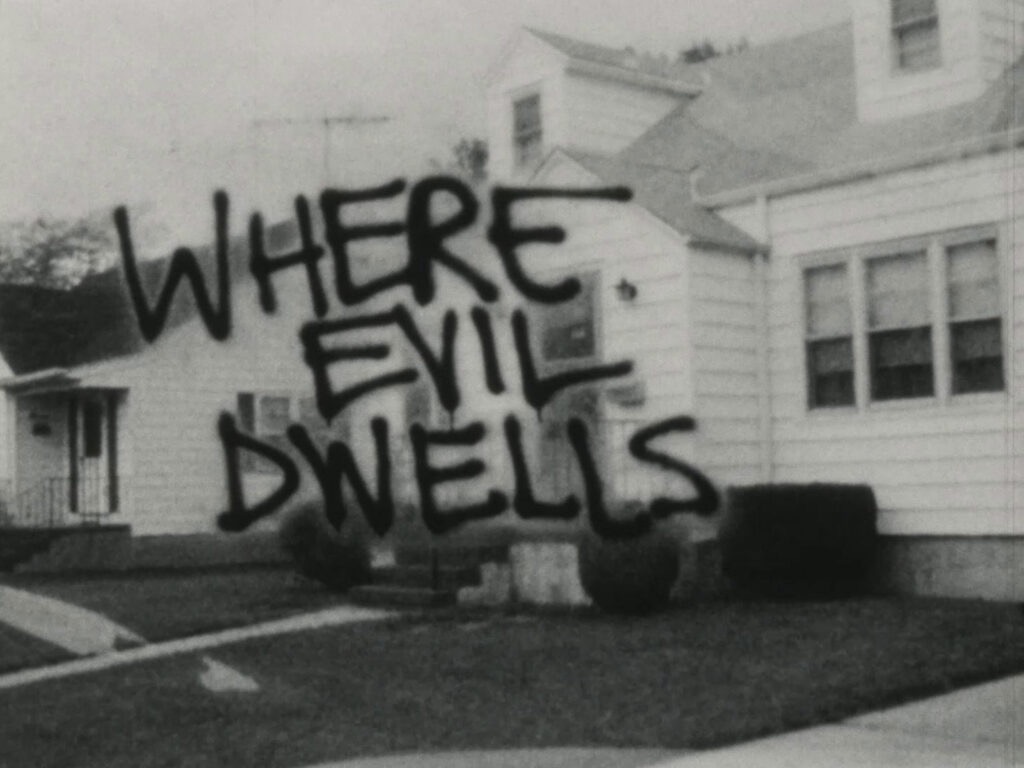
Where Evil Dwells – By Tommy Turner and David Wojnarowicz
1985, 31:16 min, b&w, sound, Super 8mm film on HD video
Where Evil Dwells originated as a scripted project based on the sensational story of teen killer Ricky Kasso, self-described “Acid King” of Northport, Long Island, who sparked a panic over heavy metal, drugs, and Satanism after the pseudo-ritualistic murder of a fellow teen in the woods. The widespread media attention generated by the case struck a chord with Tommy Turner and David Wojnarowicz, who interviewed several of Kasso’s friends as material for an intended Super 8 feature film. After a fire destroyed much of what they shot, Turner and Wojnarowicz ultimately edited their footage into a 30-minute “trailer” that represents an anarchic, assaultive, and wildly expressionistic take on what Wojnarowicz described as “the imposed Hell of the suburbs.” The result — something of a cross between Flaming Creatures, a proto-Jackass stunt performance piece, and a no-budget horror film — is recognized as one of the key films of the “Cinema of Transgression.” Where Evil Dwells also includes a title track by J.G. Thirlwell (Foetus) and Roli Mosimann (Swans) and appearances by Rockets Redglare as Jesus and Joe Coleman as Satan.
With: Joe Coleman, Nancy Coleman, Baby Gregor, Lung Leg, Natz, Rockets Redglare, Tommy Turner, Scott Werner, David Wojnarowicz.
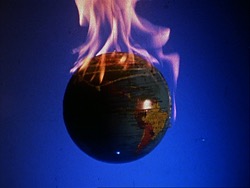
A Fire in My Belly (A work in progress) – David Wojnarowicz
1986-1987, 21 min, color and b&w, silent, Super 8mm film on video
Echoing themes explored throughout David Wojnarowicz’s art and writing, A Fire in My Belly is a visceral meditation on cultural and individual identity, spirituality, and belief systems. On a trip to Mexico City with Tommy Turner to scout Day of the Dead imagery, Wojnarowicz shot 25 rolls of super-8 film, documenting scenes that embodied the violence of city life. A central image is that of a child exploited as a fire-breathing street performer, which resonates in the title of the film and Wojnarowicz’s own experience hustling on the streets at a young age. He later staged scenes in his New York City apartment to combine with this footage, collecting dreamlike images to illustrate thematic sections he planned for the film’s structure, outlined in a cutting script. Among these images is a dancing, gun-wielding marionette, coins dropping into a plate of blood, vibrantly colored loteria cards, and the now iconic self-portrait of the artist with his lips sewn shut.
A Fire in My Belly was never completed. What currently circulates and is preserved in the Fales Library Collection of NYU, which holds the David Wojnarowicz Papers archive, is a 13-minute version entitled A Fire in my Belly, A Work in Progress, and a 7-minute excerpt that possibly represents a chapter planned for the finished version. Wojnarowicz’s cutting script shows that he thought of organizing it into discrete sections (numbered 1-8, with notes to combine sections). Each section includes notes on general themes, such as “aggression” or “hunger,” accompanied by specific symbols — religious icons, the four elements, or colors. The physical film reveals Wojnarowicz’s unfinished ordering of the sections; masking tape splices holding together the deconstructed film have since been removed for preservation, and are now indicated by black leader.
The cutting script makes clear the intended kinetic fury of the film, propelled by quick shots and stark transitions, an approach similar to the frenzied conclusion of his collaborative film with Tommy Turner, Where Evil Dwells (1985). Vibrant color and graphic images play a formal and conceptual role comparable to his paintings of the time. The iconography of the film resonates with such works as Crash: The Birth of Language/The Invention of Lies (1986), which shows a fearsome, sooty locomotive plunging through the ruins of civilization, a correlation of industry and speed with humankind’s separation from nature and ultimate destruction that is a prominent theme of A Fire in My Belly, as is the violence with which visual and spoken language can obscure as much as reveal the truth.
The movement of the film itself — never resting too long on an image, scenes of Mexico City shot from a passing car — becomes an expression of the speed and aggression of modern living. As Wojnarowicz describes in his essay In the Shadow of the American Dream: Soon All This Will Be Picturesque Ruins, especially in the sprawling west of America, vehicles are not just a convenience, but an agent of class stratification and indifference: “Owning a vehicle, you could drive by and with the pressure of your foot on the accelerator and with your eyes on the road you could pass it quickly — maybe not fast enough to overlook it completely, but fast enough so that the speed of the auto and the fear centers of the brain created a fractured marriage of light and sound. The images of poverty would lift and float and recede quickly like the gray shades of memory so that these images were in the past before you came upon them. It was the physical equivalent of the evening news.”
Wojnarowicz was compelled to document and represent the lives of those he felt society sought to repress with the ruthlessness of the locomotive in his Crash painting. Mexico especially made a deep impression on him. Visiting shortly after the devastation of the 1985 Mexico City earthquake, he was struck by the extreme poverty he witnessed, which he described in an interview in 1991 with Jeri Cain Rossi: “I look at the poverty in New York which has gotten really more and more extreme over the last eight years. And people I know just say they can’t believe it’s getting to this stage. I just laugh and say, ‘Go to Mexico City and you’ll see the future of us.’ You see just how far people get pushed … When you actually see like what they’re making per day and how impossible that would be to survive on, I’m just amazed that people can get pushed to such an extreme.”
In admonishing against the destructive forces of industrialized society, A Fire in My Belly also celebrates the colorful pageantry and social and religious rituals of poor and working-class Mexican cultures, which in their vibrancy speak to the endurance of the human spirit even in terrible circumstances. Wojnarowicz appreciated these sparks of life, perhaps burning all the brighter for the pressures being exerted. Writing later in a catalog accompanying a solo show at his gallery, P.P.O.W., in 1989, he observed: “Going south of the border I found myth to still be very much alive and with it the sense of connection to the ground people walked on.”
ITSOFOMO (in the shadow of forward motion) – By David Wojnarowicz and Ben Neill
1989, 22 min, color, sound
ITSOFOMO (in the shadow of forward motion) combines film clips seen throughout Wojnarowicz’s filmography, including footage of Beluga whales and other animals at the Coney Island Aquarium; Day of the Dead celebrations in Mexico City; ants crawling on a crucifix; and Wojnarowicz sewing his mouth closed in protest of public silence around AIDS in the United States.
The visceral, flickering imagery is accompanied by a sparse, yet swelling soundtrack by Ben Neill and voiceover of Wojnarowicz reading excerpts of his texts including “Living Close to the Knives” and “When I Put My Hands on Your Body.” Wojnarowicz’s enraged and increasingly hoarse voice details his deeply personal and political experiences with AIDS and the government’s complicity in tens of thousands of deaths.
As a multimedia performance piece, ITSOFOMO premiered at The Kitchen on December 7, 1989. The immersive performance featured Neill’s live soundtrack, readings, video, slide projection, papier-maché sculptures, and dance, presented at an accelerating pace that sensorially emulated the increasing emergency of the AIDS epidemic. In Wojnarowicz’s words: “Consider that you’re in a car speeding along on an expressway. Everything that you see out of the corner of your eye which doesn’t register [while you’re] in the pursuit of speed…It’s all the things quietly occurring, within absence of sight.”